Audit and roadmap for Laica, a smart collar for canine health monitoring
Ayudavets commissioned a comprehensive audit of Laica, a dog collar with artificial intelligence capabilities, to establish the true state of development and define the critical steps to market. The result: a clear, realistic roadmap that gave the team back its visibility and focus.
Visit the project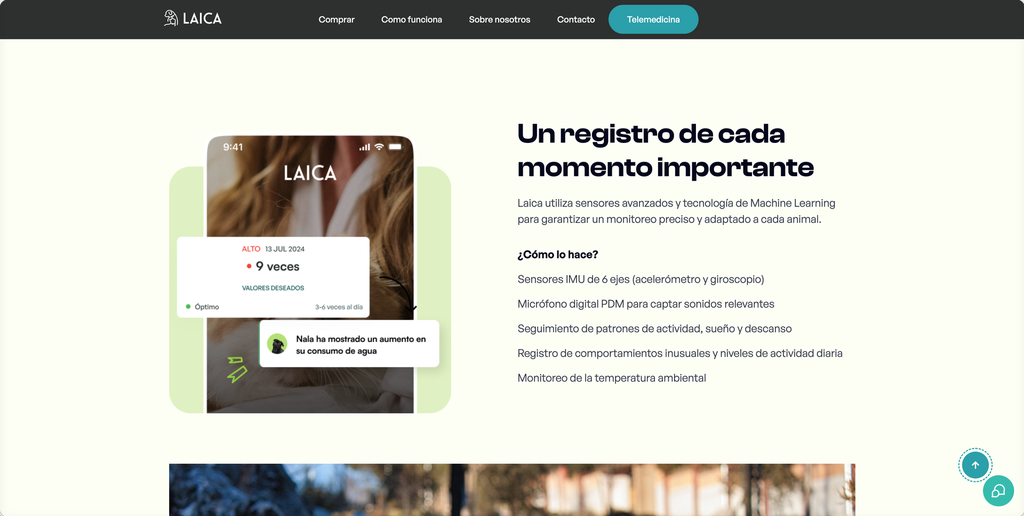
Challenge
Laica was entering a demanding phase typical of connected products: significant progress had been made on several fronts (device, software, and model), but a single, validated view of the whole was missing. The opportunity was to turn a component-by-component development into a market-ready product: consistent, integrable, documented, and with clear quality criteria.
The main challenge was to accurately assess the maturity of each part (device, firmware, backend, and app), identify dependencies and friction between teams, and translate all of that into a prioritized work plan that would speed up the route to market without compromising reliability or user experience.
Solution
The project was approached with a product-oriented, time-to-market consulting mindset, structured in phases:
- Diagnosis and maturity audit: a high-level functional and technical review of the existing components, identifying integration gaps, risks, and blockers, and checking them against market expectations.
- Dependency mapping and end-to-end integration: defining key interfaces and flows between device, firmware, backend, and mobile app to ensure robust, traceable communication.
- Restructuring and operational documentation: organizing deliverables, writing critical documentation (interface contracts, flows, acceptance criteria), and establishing a common foundation for the team's coordinated work.
- Model training and validation plan: defining a solid plan for data, training, and evaluation.
- Prioritized roadmap: building a milestone-based plan, prioritized by business impact and risk reduction.
- Bug fixing: analysis and development of the app's backend, with the goal of getting the device's main flow working.
Certain technical details have been adapted or omitted to comply with NDAs and information security policies.
Results
- Real visibility into the state of the product: the audit aligned the team on what was ready, what needed reinforcing, and which dependencies were blocking progress.
- Lower integration risk: incompatibilities between components were identified and resolved, reducing the risk of rework and of failures in end-to-end testing (rework is estimated to have fallen by around 20–30%).
- A faster route to market: a milestone-based roadmap with clear priorities, enabling quick decisions and a focus on what brings launch closest (a potential 15–25% improvement in delivery efficiency and coordination).
- Better coordination between teams: documentation and acceptance criteria that made communication smoother across hardware, firmware, backend, and app profiles, and made the project more predictable.
- A solid foundation for AI and product evolution: a model training and validation plan built for continuity (data quality, evaluation, and an improvement roadmap), preparing the product to grow in capabilities without losing control.
- Confidence and internal alignment: a restored sense of viability and an actionable plan, turning Laica's launch into a tangible, near-term goal, with a clearer strategy for what to build first and how to validate it.